Key Takeaways
•The core myth: You do NOT automatically inherit the old house's setbacks or story count. Confirm with the building department that new construction must meet today's Belmont zoning bylaw before you bid.
•The two killers: Setback and story-count limits sink teardown projects — and Belmont may count your basement as a story. Guess wrong and you can get a work-stoppage order.
•The bottom line: Run a zoning checklist and call Belmont's building office before you bid, not after your framing goes up.
•The ADU angle: A recent Massachusetts state law may let you add a rental or in-law suite by right — but local Belmont rules still shape it. Confirm the current rules with your agent or the building department.
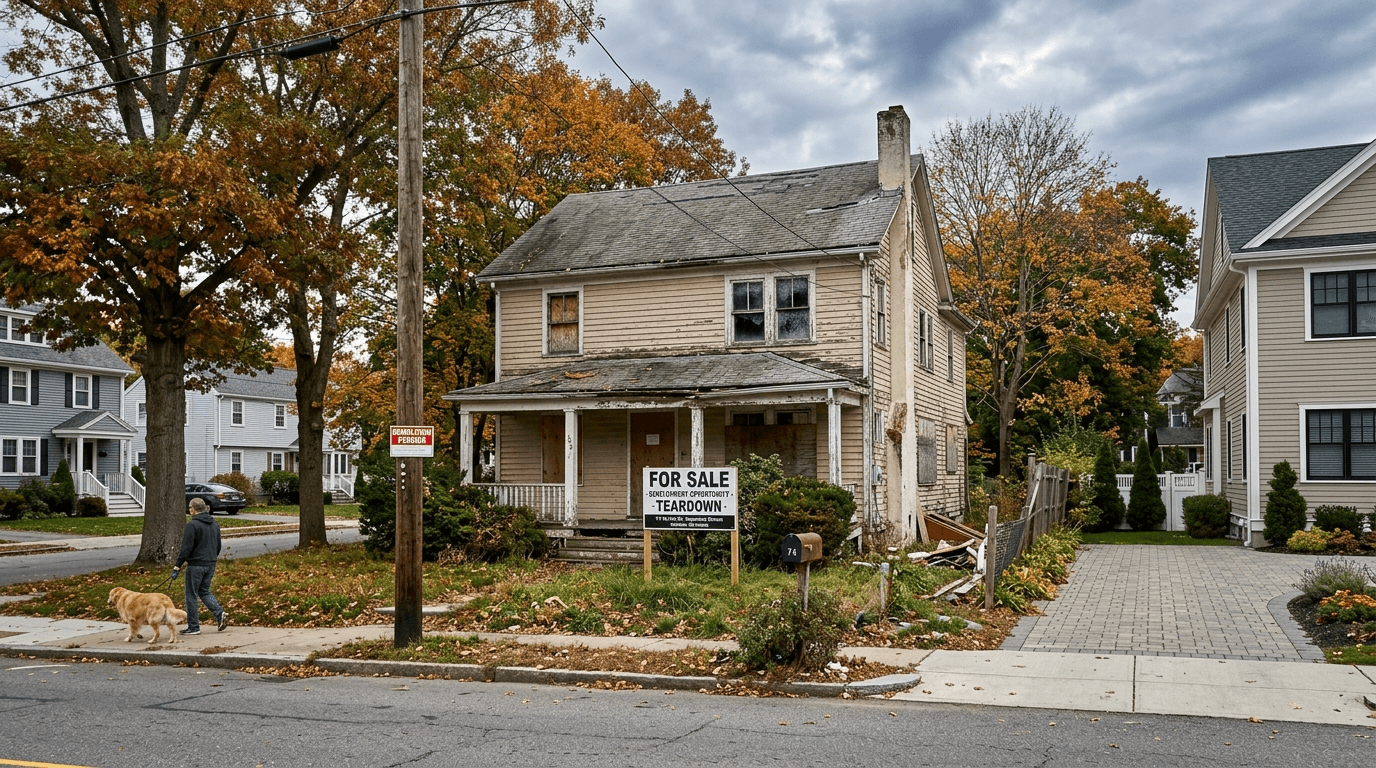
So you found a recently sold lot in Belmont with an older house sitting on it. The street's perfect, the schools and commute check out, and the plan seems dead simple: buy the lot, tear down the tired house, build the home you actually want.
Here's where smart buyers get tripped up: Belmont's zoning bylaw may not care what stood there before. That old footprint won't protect you, and the old setbacks might not carry over at all. Assume they do, and your dream build can turn into a stop-work order — so confirm the current rules with your agent or the building department before you get attached.
It's late summer 2026, and high price-per-square-foot sales are pushing more move-up buyers toward teardowns. Before you bid, know exactly what Belmont will actually let you build.
What Should the "Middle Finger House" Teach You Before You Buy?
A developer bought a home at 231 Orchard St., gutted it down to the studs, and added a new second story with dormers for a master suite. Then the town halted the work.
Two problems caused it. First, the new second story sat too close to the property line. The builder assumed the old, closer setback carried over — it didn't, according to the project's own application:
"Not being familiar with the zoning laws, our thought was that since the existing was at 8.5' the addition would be by right."
That assumption is the trap. Second, the design ran afoul of Belmont's story-count rules. Confirm with the building department how Belmont counts stories, including whether a basement counts.
The project ended badly, and neighbors nicknamed it "the middle finger house." As Chair Nicholas Iannuzzi put it: "It's build, and then ask for forgiveness later." This wasn't a one-off, either — a similar Birch Hill Road project hit the exact same story-count wall.
The lesson: in Belmont, build-now-ask-later just doesn't work.
What Zoning Checklist Should You Run Before You Bid?
Run through this before you spend a dime on plans, get emotionally attached, or waive protections in an offer.
•Verify the setbacks for the specific zoning district — front, side, and rear yards. Don't rely on where the old building sat.
•Confirm the maximum story count, and ask whether your basement counts.
•Check lot coverage, floor area, and height. These rules decide whether your design is allowed "by right" — meaning without special board approval.
•Call Belmont's Office of Community Development before bidding. Ask what's allowed by right and what needs a special permit.
That last step matters more than it sounds. As Assistant Director Ara Yogurtian explained about the Orchard St. case, a project allowed by right needs far less relief: "If they can do a project by right, the special permit they need is for the setback and the setback only." Treat your pre-bid call as due diligence, not a formality — it can save you from an expensive redesign down the road.
Can You Just Get a Variance If the Lot Is Too Tight?
You might be thinking: If the legal building envelope is too small, I'll just ask the Zoning Board for relief. Be careful — that's the exact thinking that sank the "middle finger house."
Confirm with your agent or attorney that variances and special permits in Belmont are discretionary and never guaranteed. Plan for roughly six months from filing to decision.
Belmont special permit or variance timeline
A practical planning table for Belmont homeowners who may need zoning relief before building or renovating.
| Category | Process timing |
|---|---|
| Process duration | approximately six (6) months |
| Application submission lead time | approximately 6 weeks |
| ZBA meets | the first Monday of each month |
| ZBA case limit per night | 5 cases per night |
| Permit Granting Authority decision period | up to ninety (90) days |
| Appeal period after filing decision | 20 day appeal period |
| Deadline for submitting additional information | up until seven days prior to your public hearing |
Source:TOWN OF BELMONT
The board isn't a rubber stamp. It denied the 231 Orchard St. request even after the house was nearly built, so don't base your budget on zoning relief you haven't already won. The process also includes a separate 20-day appeal period after a decision.
Confirm the current application fee and filing requirements with the building department before you count on relief. This matters for your wallet, because carrying costs, redesign fees, and construction delays can eat into the value of the lot fast.
Isn't Belmont Loosening Zoning Anyway?
Fair question. You may have heard state housing rules are pushing towns to allow more housing. True, in some areas.
But the MBTA Communities framework and Belmont's upcoming town votes generally focus on multi-family and mixed-use districts — different from the single-family rules that usually govern a teardown lot. For a typical single-family lot, you still need to check the current Belmont bylaw directly. Town rules can shift, and the exact district matters, so confirm the live zoning text with Belmont's building department before you buy.
That's the whole point of the checklist: don't assume the lot works just because the sale price looks right.
How Should You Budget From Permit to a Certificate of Occupancy (the Town's Final Sign-Off to Move In)?
Zoning risk is really money risk. If the lot can't hold the house you want, you may overpay before construction even starts.
Confirm current permit fees with the Belmont building department, and budget separately for plumbing, gas, and occupancy inspection fees. Don't budget only for framing, finishes, and landscaping — plan the full path from permit to certificate of occupancy, the town's final sign-off that you can move in.
Then there's the ADU opportunity worth weighing. Under a recent Massachusetts state law, you may be able to add one accessory dwelling unit by right on a single-family lot — a small second home like an in-law suite or rental. Confirm the current rules and any Belmont limits with your agent or the building department.
Massachusetts ADU momentum after the Affordable Homes Act
Headline statewide indicators for Massachusetts’ by-right ADU standard and upcoming financing support.
Statewide ADU rollout
Accessory dwelling units (ADUs) approvedMore than 1,200
Timeframefirst year
MassHousing construction financing coming in2026
More than 1,200 ADUs were approved statewide in Massachusetts in the law's first year, and MassHousing construction financing arriving in 2026 could make building one more affordable — though that's a statewide figure, and Belmont's local numbers and limits may look different. An ADU could mean rental income, a separate space for aging parents, or flexibility for adult children. But Belmont still shapes the details, so confirm the specifics before you bid.
Permits protect you later, too. Unpermitted work can create insurance and resale headaches, and appraisers and lenders may review permit records when you sell — confirm the specifics with your agent or attorney. As one longtime Belmont official put it: "Building permits are the law."
How Do You Confirm the Lot Before You Build?
Use this framework before you bid on a recently sold Belmont lot:
•Verify setbacks for the district — not the old footprint.
•Confirm the story count and whether the basement counts.
•Check lot coverage, floor area, and height.
•Separate what's allowed by right from what needs board approval.
•Call Belmont's building office before you commit.
This checklist isn't red tape. It tells you whether the lot can actually hold the home you want — and when to walk away.
In a high price-per-square-foot market, the best buyers aren't the ones who move fastest. They're the ones who know what they can legally build before they bid.
If you're looking at a Belmont teardown or recently sold lot, send me the address. I'll help you pressure-test the zoning, resale logic, and build potential before you put serious money at risk.