# Wellesley New Construction Systems 101: What HVAC, Insulation, and Materials Actually Justify the Price Per Square Foot?
Let's have the honest conversation you often don't get at a showing.
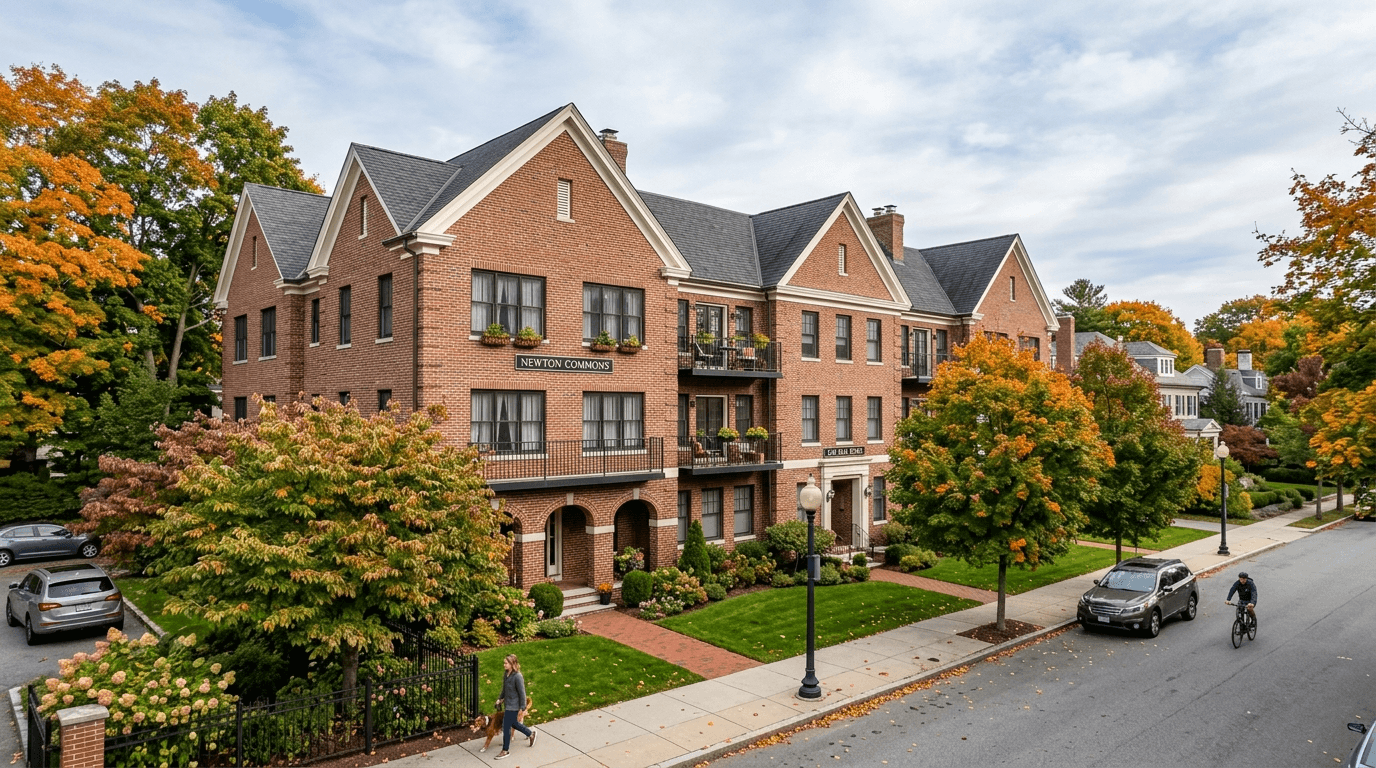
You may be weighing a shiny new Wellesley build against a beautifully renovated older home with a shorter commute to Boston. You might assume the renovation gives you the same comfort, just with more character.
Here's the friction: ductwork doesn't care about your Instagram kitchen.
What are the key takeaways?
•The one thing a retrofit struggles to match: the whole-house envelope — the sealed, insulated shell and the heating-and-cooling system designed into the framing from day one.
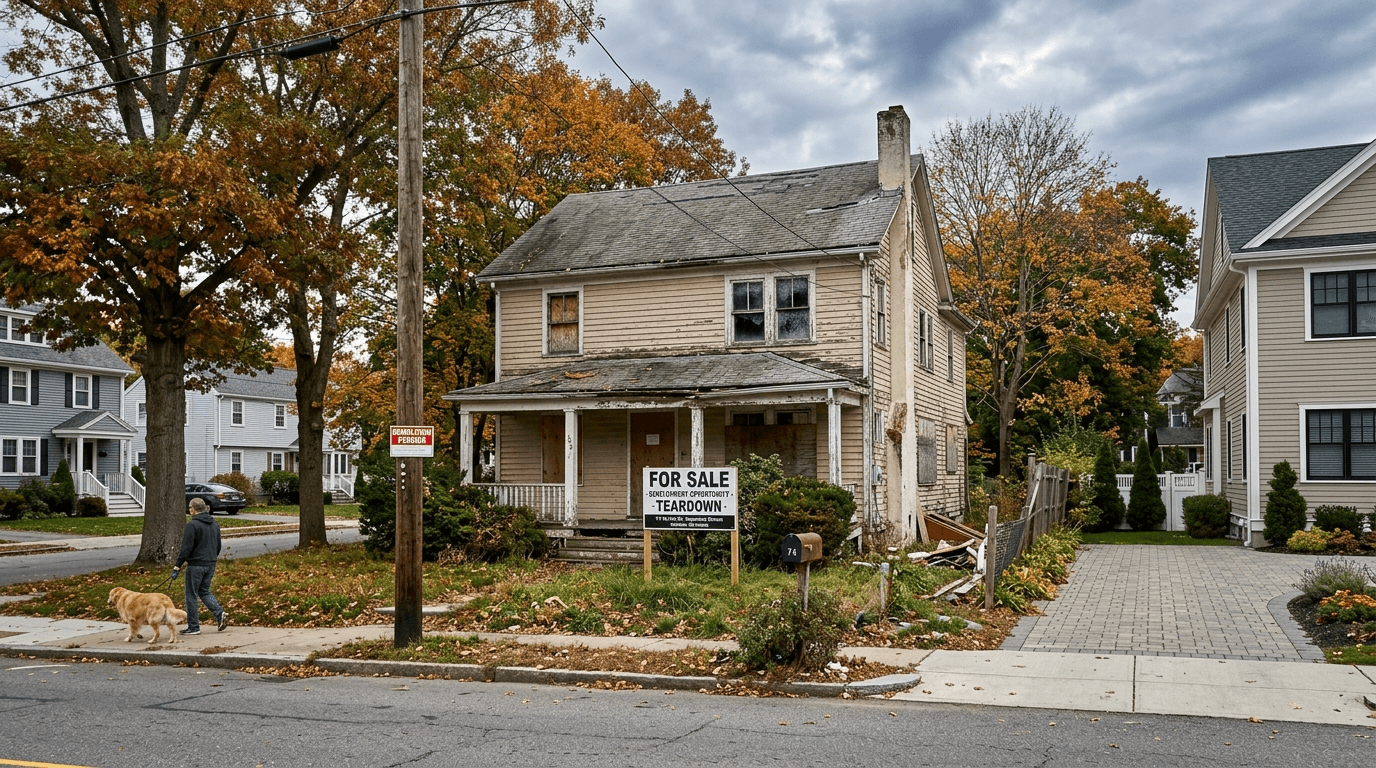
•The reality: Wellesley's housing stock is largely older, so most "renovations" chase a shell built for a different era.
•The bottom line: finishes are negotiable; a strong new build makes envelope quality easier and cheaper to achieve — that's what drives much of the higher price per square foot.
•The catch: the town's heat-pump rebates favor retrofits, so a retrofit can recover incentives a new build cannot. Weigh those savings against the build premium before you decide.
Why doesn't ductwork care about your kitchen?
The real cost gap between a new build and a Wellesley renovation is usually not the countertops. It is the whole-house envelope — the sealed, insulated shell — and the heating-and-cooling system designed around it.
A good new build gets those pieces right during framing. A renovation has to squeeze modern comfort into a house built for a different era. That matters in Wellesley, where homes work hard through demanding winters and hot, humid summers. A leaky, under-insulated shell often means hot upstairs bedrooms, uneven rooms, and higher bills.
The finishes sell the house. The envelope is what you actually live in.
Why does Wellesley's older housing stock make this harder?
Most Wellesley homes were built before today's comfort and energy standards. Under a recent state law, the town operates under the Stretch Energy Code — a tougher building energy standard — which gives buyers a useful dividing line.
Older homes can be improved, but they rarely perform like a new envelope without a full energy assessment and serious retrofit work. That is a spectrum contingent on how much you spend, not an unbridgeable gap. The practical limit: a retrofit can only fix what crews can reach. Wall cavities, framing layouts, duct paths, and roof assemblies are often hidden inside the old shell, and every improvement gets harder once a home is finished.
New construction is different. The builder can size the heating and cooling system to the home from the start, using a professional standard called a Manual J calculation — the math used to estimate how much heating and cooling a specific house needs. The rebate rules also require the system to be sized to the home's calculated needs. Ask your agent for the exact current numbers.
Which three systems actually move the price per square foot?
Three mostly invisible systems help explain why a strong new build costs more per square foot. They don't photograph like marble, but they affect your comfort every day.
1. How was the HVAC designed?
In a new build, the HVAC plan can be drawn into the framing plan. The zones, duct runs, heat-pump locations, and system size are planned before the walls are closed.
Modern cold-climate heat pumps move several times more heat energy than the electricity they use, because they move heat instead of burning fuel. Paired with a tight envelope, that can mean lower operating costs.
A renovation can use similar equipment and reach comparable efficiency. The difference is not usually the gear — it's the difficulty and cost of fitting that gear into an existing house, where ducts may be poorly placed, undersized, uninsulated, or missing entirely.
2. How tight is the insulation and envelope?
This is the line a renovation struggles to cross cheaply.
A new build can insulate and air-seal continuously during framing. Crews can reach the walls, attic, rim joists (where the floor framing meets the outer wall), rooflines, and duct paths before finishes go in. A renovation often has to chase those same improvements through finished walls and ceilings. That chase costs real money: a new full duct system runs $4,500 to $11,000, according to Massachusetts HVAC cost guidance from GEM Plumbing & Heating. New builds route ducts during framing, so this specific chase-through-finished-walls cost mostly hits renovations.
Once you have an efficient system, the running cost is low — and this benefit is available to retrofits too. Across all Wellesley property types, the town's own fuel-cost figures put heat-pump heat at $17.75 per MMBTU (MMBTU is a standard unit for comparing heating energy cost). That is far below natural gas at $30.26, fuel oil at $30.83, propane at $45.19, and electric resistance at $48.82.
Heating Cost by Energy Source in Wellesley
Compares heating cost per MMBTU across common heating sources from Wellesley’s heat pump program page.
| Series | Label | Value |
|---|---|---|
| Heating Cost ($/MMBTU) | Fuel Oil | $30.83 |
| Heating Cost ($/MMBTU) | Propane | $45.19 |
| Heating Cost ($/MMBTU) | Natural Gas | $30.26 |
| Heating Cost ($/MMBTU) | Electric Resistance | $48.82 |
| Heating Cost ($/MMBTU) | Heat Pumps | $17.75 |
Source:Heat Pumps | Wellesley, MA
In a tight home, the system doesn't fight leaks and drafts all day, so more of your energy spending turns into actual comfort.
What rebate catch should new-construction buyers understand?
Here is the honest complication, and it is central to the money math: Wellesley's rebate structure favors existing homes.
The Wellesley Municipal Light Plant heat-pump rebates are aimed at retrofits. Confirm the exact current amounts with WMLP or your agent, since programs change — but the structure combines a whole-home rebate (tied to removing or decommissioning the old heating system) with a separate weatherization rebate.
New construction is explicitly not eligible. Per WMLP rules, the program excludes "new construction projects" — including large additions and gut renovations where equipment is needed to meet current building code; confirm current eligibility with WMLP or your agent. In plain terms: brand-new homes, large additions, and full gut jobs done to meet code don't qualify.
So a smart retrofit may capture incentives that a new build forgoes. To judge a new build's premium fairly, subtract the rebate money you'd give up. If the premium clearly exceeds what a comparable retrofit would recover, the case for new construction rests on easier, cheaper envelope quality — not on running costs, which a retrofit can match.
The better question is: Are you paying for true system integration, or just new finishes?
What are the strongest arguments against new construction?
•"A gut renovation can install the same heat pump and ductwork."
True. But adding or replacing ducts in an older home "can be a big job," per GEM Plumbing & Heating. New construction handles that during framing, not around finished walls — the advantage is cost and ease, not exclusive access to good equipment.
•"Older Wellesley homes have character and bigger lots."
Completely fair. Systems data does not measure mature trees, streetscape, or architectural charm. On those points, the older home may win.
•"The rebates favor retrofits."
Correct. A new build may start more efficient, but it gives up rebate dollars a retrofit can capture — so the math is genuinely not one-sided.
What should you ask before choosing a Wellesley home?
Don't judge price per square foot by finishes alone. Ask questions that expose the systems.
•Ask for the Manual J calculation. This shows whether the system was sized to the actual house.
•Ask for the SEER2 and HSPF ratings (the cooling and heating efficiency scores — higher numbers mean lower bills).
•Ask whether the ducts are insulated and sealed. A major comfort detail in Wellesley's climate.
•Ask what insulation and air-sealing work was done. "Renovated" can mean many things — you want specifics.
•Considering a renovation? Get a Home Energy Assessment first. WMLP requires one for qualifying homes to access the whole-home rebate, and it tells you what is truly fixable — confirm current rules with your agent.
Finishes can be changed later. The envelope is harder to fix. If you want to compare a specific Wellesley new build against a renovated older home, send me the addresses. I'll help you look past the photos and weigh the systems — and the rebate math — that actually drive value.