Key Takeaways
•The biggest shock: Your closing-day escrow — the part of your monthly payment your lender sets aside to pay taxes and insurance — was calculated on the previous owner's tax bill, not yours. Once Waltham reassesses your home to match your purchase price, your monthly mortgage payment can jump by hundreds of dollars in year two.
•The "fixed" payment isn't fixed. Property taxes, insurance, and escrow shortfalls routinely reset your monthly nut. As one CFP told SmartAsset, taxes and insurance "often make up more than 20% of the total payment."
•Budget beyond the down payment. Plan for move-in basics, ongoing maintenance, and an emergency fund — before you sign.
•Act fast on assessments. Read the Waltham assessor's notice the day it arrives. Missing an abatement deadline (a formal request to lower your assessed value) by one day ends your case.
You got the keys. You signed the 30-year fixed mortgage. The hard part is over, right? Not quite. Closing day isn't the finish line — it's the starting gun.
Buying your first home in Waltham is a huge deal. The down payment feels like the mountain you had to climb — and you did it. But the financial surprises that follow closing day can catch even well-prepared buyers completely off guard.
Some costs are small and steady. Others can hit your monthly payment in ways you genuinely didn't see coming.
The biggest one? Property taxes.
Here's what to plan for before you ever pick up those keys.
Why Can Your Property Tax Bill Jump After You Buy?
For many first-time buyers, this is the most expensive surprise of all — and it's hiding in plain sight.
At closing, your escrow payment is typically based on the seller's old tax bill. That old bill often doesn't reflect what you just paid for the home. Once Waltham updates the assessed value to match your purchase price, your tax bill can climb. And when your tax bill climbs, so does your monthly mortgage payment.
Here's why this hits especially hard locally: property taxes supplied 69.4% of Waltham's FY2018 revenue budget. The city runs heavily on property tax revenue, which means assessments aren't something the city takes lightly.
Where Waltham’s FY2018 Revenue Budget Comes From
A part-to-whole view of the city’s FY2018 revenue budget by source.
TOTAL
Property taxes
69.4%
Local receipts
9.6%
State aid
8.0%
Enterprise funds user charges
13.0%
| Series | Label | Value |
|---|---|---|
| General | Property taxes | 69.4% |
| General | Local receipts | 9.6% |
| General | State aid | 8.0% |
| General | Enterprise funds user charges | 13.0% |
For context, the average owner-occupied single-family home in Waltham carried an annual property tax bill of $4,101 in FY2018 — and that was after a 30% residential exemption.
Waltham FY2018 Homeowner Tax Snapshot
A quick homeowner-focused snapshot of Waltham’s FY2018 assessed value, residential exemption, average tax bill, and year-over-year bill change.
Average owner-occupied single-family home
Assessed value$473,000
Residential exemption applied30%
Annual property tax bill for average owner-occupied single family home (FY2018)$4,101
Change in annual property tax bill from FY2017decrease of about $21
That was years ago. Waltham home values have risen significantly since, and assessments have followed. Buyers today should expect a larger base bill than those older figures suggest.
The bottom line: the payment you're approved for may not be the payment you're actually living with in year two.
How Could the Math Affect Your Monthly Payment?
The formula is straightforward. Take your assessed value increase, multiply it by Waltham's current residential tax rate, and you've got your added annual tax. Divide by 12 to see what that does to your monthly escrow.
For the current residential tax rate, check the City of Waltham Assessor's Office directly.
Even a modest reassessment bump can translate into a real monthly increase. That's not a rounding error — it can be the difference between feeling comfortable and feeling stretched thin.
What Should You Do When the Assessment Notice Arrives?
Don't let that envelope sit on the counter. When the Waltham Assessor's notice shows up, move quickly:
•Read it the day it arrives.
•Pull 3–5 nearby comparable sales that support a lower value if you believe the assessment is too high.
•Know your abatement deadline. An abatement is a formal request to lower your assessed value — miss the deadline by a single day and your case is over.
•Call your loan servicer. Ask whether any escrow shortfall will be spread over 12 months or billed as a lump sum.
Speed genuinely matters here. This is one homeowner task where waiting costs you.
Why Isn't Your "Fixed" Mortgage Payment Really Fixed?
A 30-year fixed mortgage locks in your interest rate. It does not lock in your full monthly payment.
Most mortgage payments bundle together:
•Principal
•Interest
•Property taxes
•Homeowner's insurance
The first two are fixed. The last two are not.
If your homeowner's insurance premium goes up, your escrow payment goes up. If your property taxes rise, same thing. That's how a "fixed" mortgage can still feel surprisingly variable over time.
"Property taxes and insurance are very much not fixed and often make up more than 20% of the total payment." — Zachary Mineur, CFP, quoted by [SmartAsset](https://smartasset.com/mortgage/are-mortgage-payments-fixed)
Utilities are another place where new homeowners get caught off guard. A two-bedroom apartment heating bill looks nothing like a four-bedroom Waltham Colonial in January. Older homes with drafty windows can get expensive fast — Mass Save has energy data and rebate information specific to Massachusetts that's worth bookmarking.
Ask the seller for 12 months of utility bills before closing. It's a simple request that can tell you a lot.
Your real monthly cost isn't just the mortgage quote. It's the mortgage, taxes, insurance, heat, electricity, water, maintenance, and repairs — all of it, together.
Why Do You Need an Emergency Fund After Closing?
Renters call the landlord. Homeowners call the plumber — and pay the bill themselves.
For typical price ranges on emergency repairs like a burst pipe, failed water heater, roof leak, or electrical issue, cost guides from HomeAdvisor or Angi give a useful national baseline. Your Waltham quote may run higher.
A dedicated home emergency fund keeps you from putting every unexpected repair on a credit card. A reasonable planning target is several thousand dollars, set aside specifically for the house — separate from your regular savings and completely separate from your down payment funds.
Many Massachusetts buyers use the ONE Mortgage program, which is designed for low- and moderate-income first-time buyers and offers a low down payment without private mortgage insurance (PMI). For current requirements, check the program page directly. It's a genuinely useful path to homeownership — but it can also mean your cash reserves are thin on day one.
Rebuilding that cushion should be one of your first financial goals after closing.
What Are the Strongest Arguments Against Worrying About These Costs?
Fair question. Let's look at the common pushbacks honestly.
Doesn't Proposition 2½ Cap Property Tax Increases in Massachusetts?
It does — but not in the way most people assume.
Proposition 2½ limits the growth of the city's total property tax levy. It doesn't guarantee that your individual bill can only rise by 2.5%.
When a longtime owner sells, the assessed value on that property may have been lagging behind the real market for years. After the sale, the assessment can catch up quickly — shifting more of the tax burden onto your property specifically.
Prop 2½ doesn't remove the risk of a personal tax jump after you buy.
Won't Escrow Smooth This Out?
Escrow spreads costs into monthly installments. It doesn't make the increase disappear.
If taxes or insurance rise, your lender may send an escrow shortfall notice and raise your monthly payment. You may also have to repay the existing shortfall over 12 months on top of the new higher amount.
For a buyer already stretched, even a modest increase can sting. Escrow is a payment tool, not a shield.
Isn't This a Nationwide Issue, Not a Waltham Issue?
Some of these costs happen everywhere. But the dollar impact scales with home prices — and Waltham homes aren't cheap.
Add in older housing stock that can need work, New England weather that adds real maintenance costs, and a city budget that leans heavily on property taxes, and the same surprise costs simply hit harder here than they would in a lower-cost market.
How Should First-Time Buyers Budget for the First Year?
Pre-approval tells you what a lender is willing to lend. It doesn't tell you what homeownership will actually feel like month to month.
A realistic first-year budget should include:
•A property tax escalator for year two
•Room for a meaningful escrow increase once your home is reassessed
•A line item for move-in basics, built from your own shopping list
•A monthly line item for small home supplies — track your actual spend for the first six months
•A maintenance reserve using roughly 1% of the home's value per year as a starting point
•A dedicated home emergency fund, ideally in place within the first six months after closing
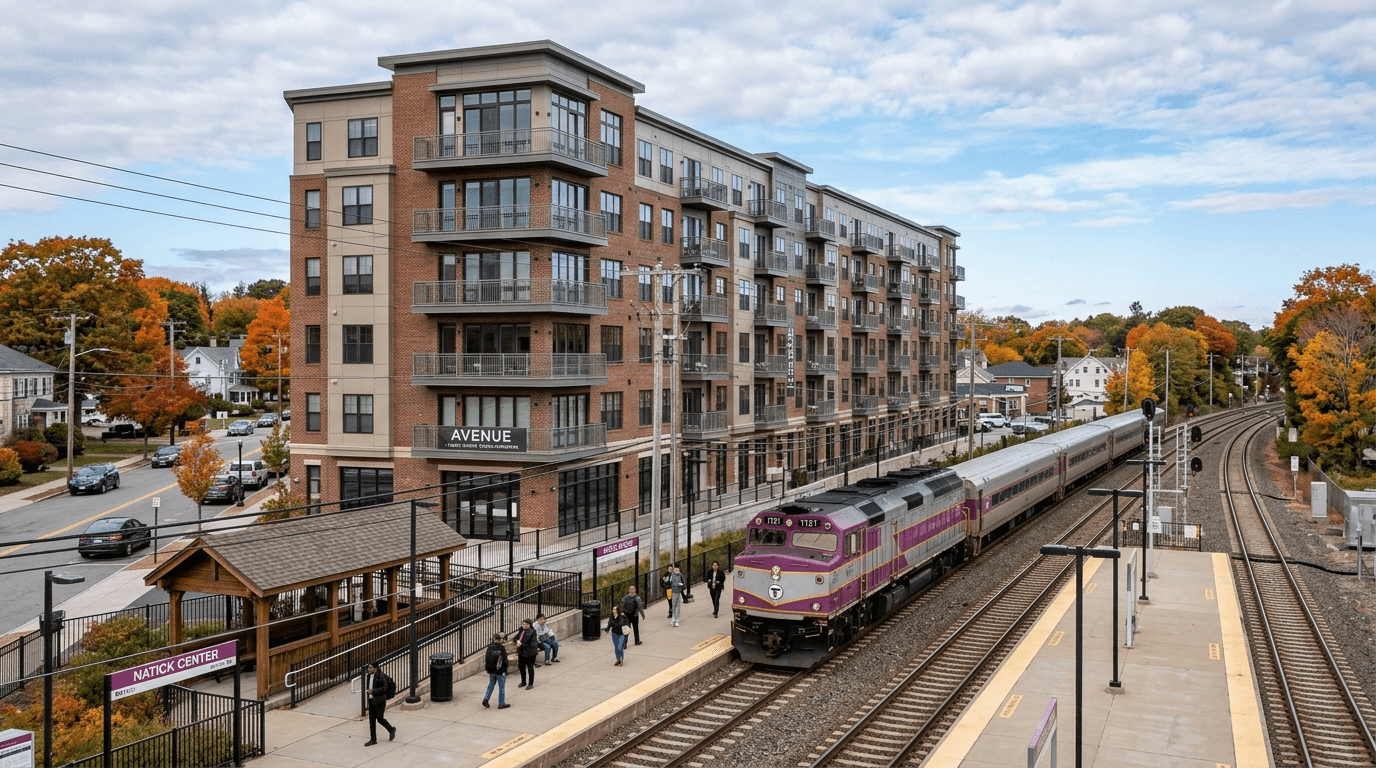
Waltham is a genuinely strong place to own long-term. Commuter rail access, established neighborhoods, steady buyer demand — the fundamentals are real. But the first 18 months can feel financially tight if your planning stopped at the down payment and closing costs.
The mortgage payment you sign for may not be the payment you live with.
Plan for that now, and you're far more likely to still love the house — and your finances — in year two.
Before you make an offer on any specific Waltham home, ask for the full cost picture: taxes, insurance, utilities, likely maintenance, and escrow risk. That's how you buy with confidence instead of surprises.