Waltham, MA Real Estate: A Relocation & Logistics Guide for Young Families
Explore Waltham’s commuter-friendly, multicultural vibe: 24.7-min average commute, 9 miles to Boston, Fitchburg Line rail, and ~$790K homes.
Written ByAndrea Forsythe
PublishedFebruary 25, 2026
UpdatedJuly 9, 2026
I'm Andrea Forsythe, a Newton, MA real estate agent specializing in new construction. With 13+ years developing homes, I guide buyers and sellers from search to keys. Serving Newton, Brookline, Watertown, Belmont, Waltham, Wellesley, Wayland, Arlington, Natick, Needham, Stoneham, Wakefield and Lexington, MA.
Waltham, MA
Region
# Waltham, MA Real Estate: A Commuter's Dream for Young Families
Waltham has quietly climbed to the top of my recommendation list for young families who want to be near Boston without paying the eye-watering prices you'll find in Newton or Belmont. It's got that rare mix you don't stumble on very often: a real, lived-in sense of community, an easy commute, and homes that families can actually afford. Let me walk you through what daily life here really looks like — the drive to work, the school run, the errands — so you can picture yourself in it.
Waltham Family Relocation Snapshot: Price, Rate & Commute
A relocation-ready hero card for young families weighing Waltham’s purchase price, financing environment, and everyday commute baseline in one mixed-unit snapshot.
The commute is one of Waltham's biggest draws: the typical resident spends just under 25 minutes getting to work, and downtown Boston is only about 9 miles away. When you're juggling careers and kids, that short, predictable trip is a real gift.
Whenever I'm showing clients around Waltham, the commute is almost always the first thing they ask about — and honestly, the answer puts them at ease. The average travel time to work here is 24.7 minutes, give or take a couple, which is remarkably tight for a place this close to the city.
Prefer to skip the driving altogether? The Waltham MBTA Commuter Rail station on the Fitchburg Line takes you straight to North Station, no parking headaches required. I'll be honest about the drive, though: local streets like Route 20 and Moody Street can bottleneck at rush hour, so if predictability matters to you, the train is often the calmer call.
Here's something worth keeping an eye on if you're planning to settle in for the long haul: there's an active proposal to modernize the Fitchburg Line, including a rebuilt Waltham Center station and dramatically better frequencies.
$850MTotal Infrastructure Cost Estimate
Fitchburg Line Modernization: Waltham Commute Upgrade Potential
A commuter-logistics project card summarizing the proposed Fitchburg Line modernization concepts most relevant to Waltham households, including Waltham Center station work and potential frequency gains.
Waltham Center Elevated Tracks & Station Rebuild Estimate$100M
Frequency during Peak Hours (North Station—Brandeis)5 min
Frequency during Off-Peak (North Station—Brandeis)15 min
Current weekday frequency (North Station—Brandeis)60 min
Service time reduction for all-stops trains33 minutes
If those upgrades go through, peak service near Waltham could shift from today's roughly 60-minute weekday intervals to far more frequent trains — a genuine quality-of-life win for commuting parents. And on the parking front, most of the condo and townhome communities I show around here come with dedicated off-street or deeded spaces, so you're not circling the block for a spot after a long day.
Are the Schools in Waltham, MA Good for Young Families?
Yes — Waltham Public Schools serve a diverse, sizable student body, and the district's elementary and secondary schools are spread thoughtfully across the city's family neighborhoods. For parents moving here, the real appeal is how close most homes sit to a neighborhood school.
Waltham's schools are notably diverse, and the families I work with often see that as one of the town's greatest strengths for raising kids. The enrollment mix leans meaningfully more Hispanic or Latino than the state average, which reflects the vibrant, multicultural character of the community itself.
Waltham Schools: District vs. State Enrollment Mix
A school-district demographic lens comparing Waltham Public Schools with statewide enrollment shares for the 2025–26 school year.
American Indian or Alaska Native
Asian
Black or African American
Hispanic or Latino
Multi-Race, Not Hispanic or Latino
Native Hawaiian or Other Pacific Islander
White
A school-district demographic lens comparing Waltham Public Schools with statewide enrollment shares for the 2025–26 school year.
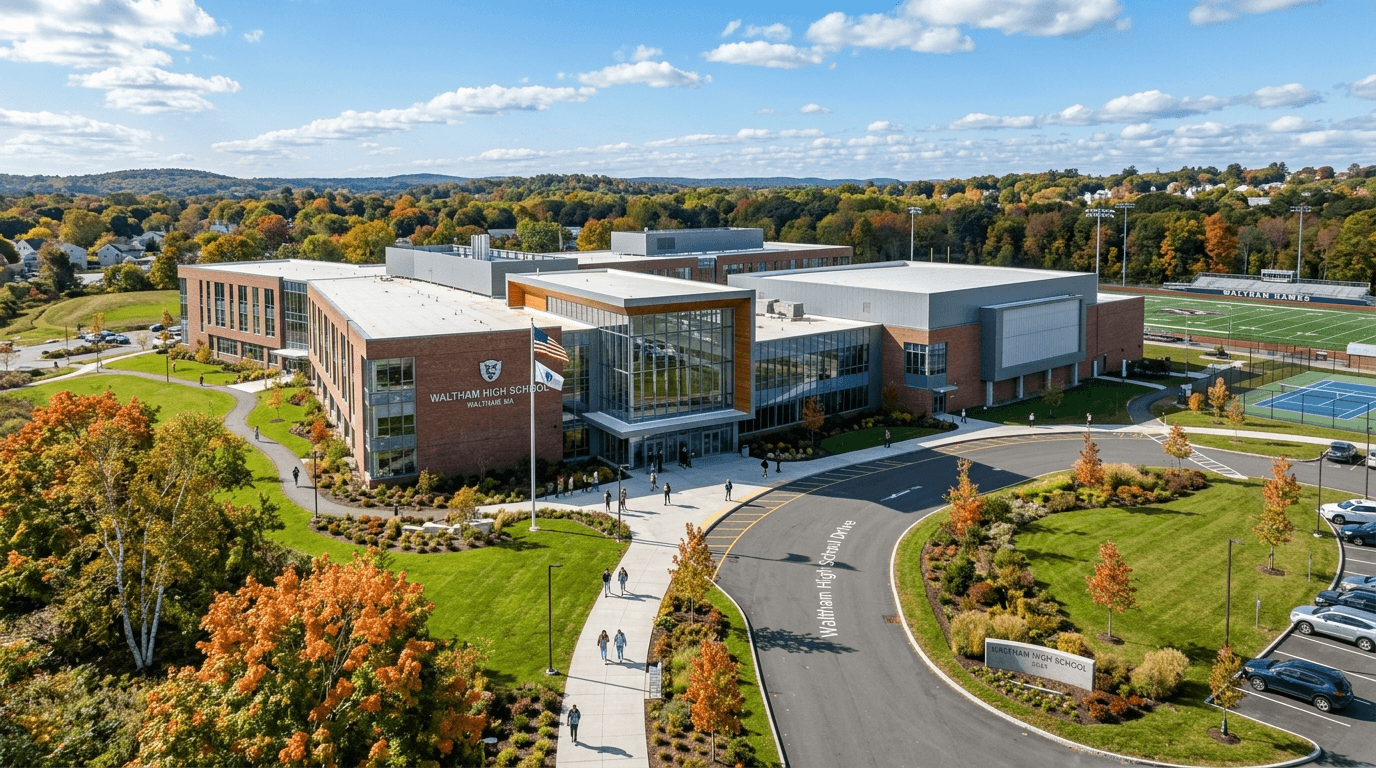
When I'm touring homes with young families, parents consistently ask about specific options like Douglas MacArthur Elementary and where the neighborhood catchment lines fall. The good news? Waltham's elementary schools are scattered throughout its residential pockets, so most condo and townhome communities sit within an easy drive of one, and Waltham High School is centrally located for the older kids.
For families who want a little more beyond the school day, I often point them toward resources like the Waltham Public Library — a wonderful, well-loved hub for story times and homework help. Compared to a denser city setting, Waltham gives you that quieter, more walkable feel so many of my clients are craving, especially during the morning school scramble.
What Are Everyday Errands and Daily Life Like in Waltham, MA?
Day-to-day life in Waltham is genuinely easy: groceries, pharmacies, gas, and top-tier medical care are all clustered within a short drive of most family neighborhoods. For a busy household, that low-friction rhythm is exactly what makes a town feel livable.
For the weekly grocery run, Hannaford is a central, dependable choice, with a Hannaford Pharmacy right there so you can knock out two errands at once. Waltham also has a wonderful spread of international and specialty markets across the city, and the families I work with genuinely love them — they're part of what gives the place its warm, connected feel.
Gas stations and everyday shops line Main Street and Moody Street, so topping off the tank or grabbing a last-minute item rarely pulls you off your route. And when you're moving with little ones, healthcare access is usually top of mind. Waltham has you covered there, with a Mass General Brigham Healthcare Center in town and urgent-care options along Main Street for those inevitable after-school scrapes and sniffles.
Then there's the safety question every parent asks. The data shows Waltham's burglary rate sitting comfortably below the national benchmark.
Safety Basics: Burglary Rate per 1,000 Residents
A family-focused safety comparison using burglary rates per 1,000 residents, with Waltham below the U.S. benchmark in the available data.
A family-focused safety comparison using burglary rates per 1,000 residents, with Waltham below the U.S. benchmark in the available data.
At 1.28 per 1,000 residents compared to the U.S. figure of 2.29, that's a reassuring gap — and one of the many reasons Waltham keeps landing on my shortlist for families who want a settled, community-focused place to call home.
What Do Homes Cost in Waltham, MA?
Waltham's typical home price sits around $790,288 — noticeably more attainable than neighboring Newton or Belmont, yet still close to Boston. For young families weighing what they get for their money, that's a big part of the draw.
To put Waltham's value in context, it helps to see how single-family pricing stacks up against nearby Watertown.
Single-Family Price Check: Waltham vs. Watertown
A quick regional price comparison showing Waltham’s relative value versus nearby Watertown for single-family buyers.
A quick regional price comparison showing Waltham’s relative value versus nearby Watertown for single-family buyers.
Waltham's single-family median of $775,000 sits well below Watertown's $1,100,000 — a meaningful difference for families trying to buy into a commuter-friendly community. Factor in a 6.10% 30-year fixed mortgage environment, and you can see why Waltham keeps drawing families who feel priced out of the flashier towns next door but still want everything Greater Boston has to offer.
If you're weighing Waltham against other communities in the area, I'm always happy to talk through the honest pros and cons of each. Because at the end of the day, the right home is the one that fits your commute, your kids' schools, and your daily rhythm all at once.
Is Waltham, MA a good place for young families to live?
Yes. Waltham, MA is a strong fit for young families who want proximity to Boston, a lived-in community feel, and more attainable home prices than nearby Newton or Belmont. Daily logistics are practical, with schools, groceries, pharmacies, healthcare, and commuter options located within a short drive of many residential areas.
How long is the commute from Waltham, MA to Boston?
Waltham, MA has a mean travel time to work of 24.7 minutes, and downtown Boston is about 9 miles away. The Waltham MBTA Commuter Rail station on the Fitchburg Line provides service to North Station, which can be a more predictable option than driving during rush hour.
Are schools in Waltham, MA convenient for families with children?
Yes. Waltham Public Schools serve a sizable and diverse student body, with elementary and secondary schools distributed across the city’s family neighborhoods. Many condo and townhome communities are within an easy drive of an elementary school, and Waltham High School is centrally located for older students.
How much do homes cost in Waltham, MA?
Waltham, MA has a typical home price of about $790,288. A harvested single-family comparison showed Waltham at $775,000 versus Watertown at $1,100,000, making Waltham a more attainable option for many families seeking a commuter-friendly Greater Boston community.
Are condos and townhomes in Waltham, MA practical for young families?
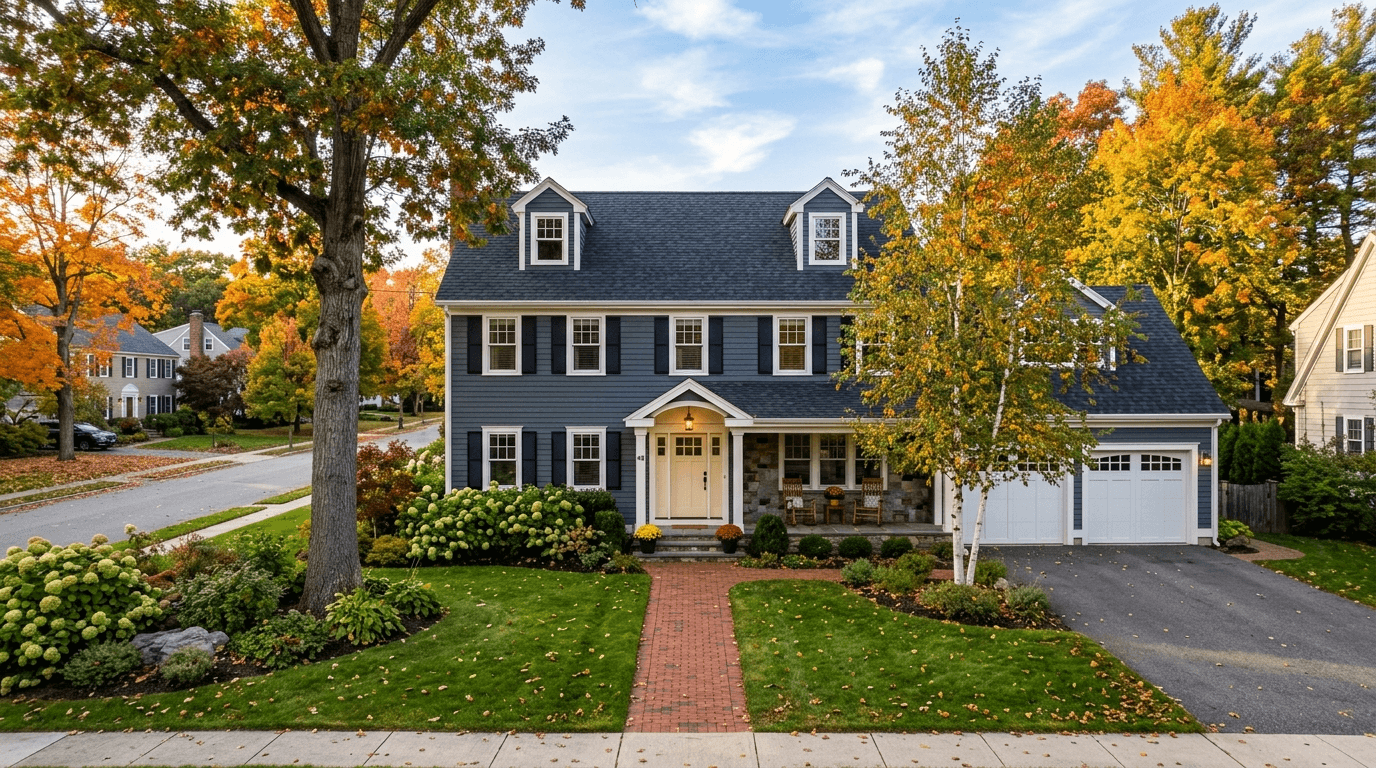
Condos and townhomes in Waltham, MA are appealing to families who want easier access to Boston without the higher price levels of Newton or Belmont. Many condo and townhome communities include dedicated off-street or deeded parking, which helps reduce the stress of finding street parking after work or school activities.
What is daily life like for families in Waltham, MA?
Everyday errands in Waltham, MA are convenient, with grocery stores, pharmacies, gas stations, and retail options located along key corridors such as Main Street and Moody Street. Hannaford and Hannaford Pharmacy provide a central option for combining grocery and pharmacy trips.
What family resources are available in Waltham, MA?
Waltham, MA has strong access to healthcare for families, including a Mass General Brigham Healthcare Center in town and urgent-care options along Main Street. The Waltham Public Library is also a well-used family resource for story times and homework help.
Is Waltham, MA safe for families?
Waltham, MA has a burglary rate of 1.28 per 1,000 residents, which is below the U.S. benchmark of 2.29 per 1,000 residents. For families comparing communities, that lower burglary rate is a practical safety data point to consider.