Key Takeaways
•The Myth: Newton, MA real estate is one brutal, unaffordable market where buyers either pay up or get out.
•The Reality: Newton is 13 separate villages moving at different speeds — with a price gap of roughly $935K to $1.1M between the city's priciest and most accessible villages (per the village-level data block below), all inside the same municipal tax rate.
•The Trade-Off: Buyers willing to cross one village line can capture part of that gap — but the gap is partly real (bigger lots, more renovated homes) and partly demand-driven. It is a value judgment, not a free lunch.
•The Bottom Line: Start your Newton search with the village map — not just the MLS.
Yes.
And if you are buying or selling in Newton right now, this is the most important thing to understand:
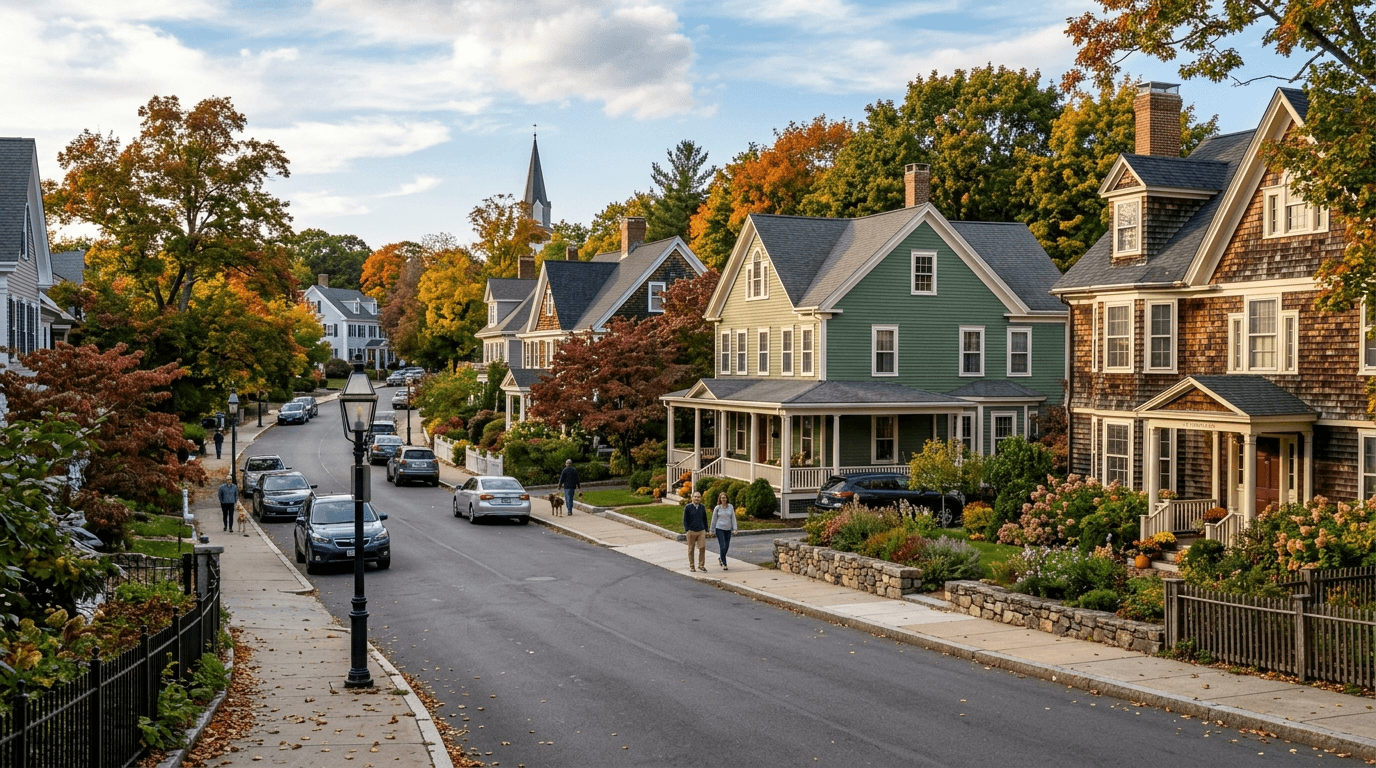
Newton is not one housing market. It is 13 village-level markets moving at different speeds — and the gap between the priciest and most accessible villages, based on the data below, runs from about $935,000 to $1.1 million.
That means the "Newton market" headline may not help you much. You need to know what is happening in your village, or in the village you are trying to buy into.
I've watched one village pull three offers in a single weekend while another, a four-minute drive away, sat untouched for a month. Same city services. Same municipal tax rate. Different feel, different price, different pace.
One quick note on terminology before we go further. Newton has one school district — Newton Public Schools — so every village shares the same district. What differs is the attendance zone (which elementary and middle school your address feeds into). When local agents say "school zones drive village prices," they mean feeder-school boundaries within the same district, not separate districts.
For buyers, the village line may be the biggest price lever you actually control. For sellers, your village can decide whether you have leverage — or whether you need to adjust fast.
What Are Buyers Actually Paying For When They Pick A Village?
Here is the honest answer: people are not just buying countertops in Newton.
They are buying 10 to 15 years of certainty. That means:
•A feeder school they trust
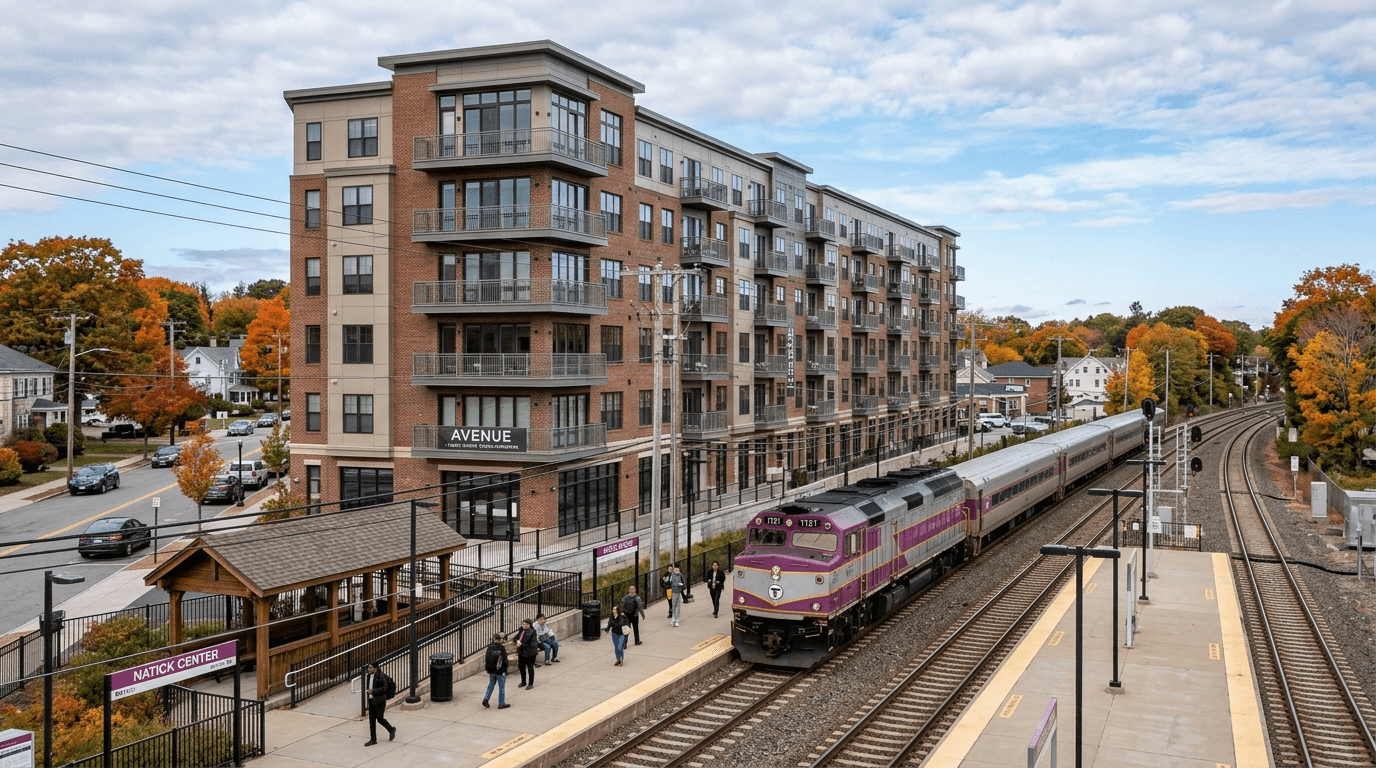
•A commute they can live with
•A village center they like
•A walkable routine
•A long-term lifestyle plan
This is also where the "village arbitrage" idea gets complicated. If you are buying a specific village center, a specific walk to the T, and a specific elementary school, then "just cross one village line" is not a costless swap. You may give up some of the certainty you came for.
So treat the village price gap as a value judgment, not a pure financial trade:
•If two villages feel roughly interchangeable to your family, the price gap is closer to true arbitrage.
•If you are dead-set on one village center or one feeder school, the gap is more like the price of the lifestyle you actually want.
For buyers, that framing can mean getting more house for the money by crossing one village line — when the lifestyle trade is acceptable. For sellers, it means you should not price your home based on "Newton" as a whole. You should price based on your exact village.
What Do The Numbers Say About Newton's Village Price Gap?
Start with the citywide baseline.
The median sold price for a single-family home in Newton is $1,305,000.
Median Sold Price by Property Type
MLS median sold prices by segment for Newton over the last 180 days.
| Series | Label | Value |
|---|---|---|
| Median sold price | Single-family | 1305000 |
| Median sold price | Condo | 520000 |
| Median sold price | Mixed residential | 1177500 |
Source:Repliers / MLSPIN
That is the citywide view. Now zoom in to the village level.
Median Price by Newton Neighborhood
Realtor.com neighborhood median price comparison for Newton neighborhoods with reported median prices.
| Series | Label | Value |
|---|---|---|
| Median price | Chestnut Hill | $2,750,000 |
| Median price | Newton Upper Falls | $1,624,950 |
Based on that block, Chestnut Hill carries a reported median price of $2,750,000 and Newton Upper Falls comes in at $1,624,950 — a gap of about $1.125 million between those two villages alone.
Here is the broader village comparison, with one important caveat: the Waban figure in this table is a 2025 Dwell360 average (roughly $2.56M), used here as an older proxy alongside the June 2026 Repliers/MLSPIN medians for Chestnut Hill and Newton Upper Falls. Treat Waban as directional, not as a current month-over-month read.
Newton Village Median Price Comparison
Compares median prices, premiums versus Newton Upper Falls, school district, and municipal tax rate across Chestnut Hill, Waban, and Newton Upper Falls for the Newton village pricing discussion in June 2026.
| Category | Median Price | Premium vs. Upper Falls | School District | Municipal Tax Rate |
|---|---|---|---|---|
| Chestnut Hill | $2,750,000 | +$1,125,050 | Newton Public Schools | Same citywide rate |
| Waban (per Dwell360 2025 averages) | ~$2,560,000 | +$935,050 | Newton Public Schools | Same citywide rate |
| Newton Upper Falls | $1,624,950 | — | Newton Public Schools | Same citywide rate |
Source:Repliers / MLSPIN
Using these numbers, Waban sits roughly $935,000 above Newton Upper Falls, and Chestnut Hill sits roughly $1,125,000 above it. That is the real spread inside the city, per the village block above.
A quick note on terms, because real estate jargon hides a lot:
•Comps = recently sold similar homes used to set a price.
•YoY = year over year (this June vs. last June).
•Days on market = how long a home sits as "active" before going under contract.
•Price per square foot = sale price divided by the home's finished square footage; a rough way to compare a 2,000-sf house to a 3,500-sf house on the same dollar basis.
•Village arbitrage = buying in a cheaper village right next to a pricier one to capture some of the price gap, when the lifestyle is similar enough.
A word on taxes, because precision matters here.
Chestnut Hill, Waban, and Newton Upper Falls are all in Newton Public Schools and pay the same citywide municipal tax rate. But the rate is uniform; the dollars are not, because assessed values differ. A $2.5M home pays substantially more in total tax than a $1.5M home at the same rate. So the village opportunity is not "avoid the tax bill." It is "what does my money buy in space, lot, condition, and location after I cross the line."
(Any specific annual-tax dollar figure depends on the assessed value of the individual home, so we are not putting a single citywide number on it here.)
How Fast Are Newton Homes Actually Selling?
Price is only half the story. Speed matters just as much.
Citywide, Newton single-family homes are selling in a median of 12 days on market.
Median Days on Market by Property Type
Median days on market by property segment for Newton over the last 180 days.
| Series | Label | Value |
|---|---|---|
| Median days on market | Single-family | 12 |
| Median days on market | Condo | 16 |
| Median days on market | Mixed residential | 15 |
Source:Repliers / MLSPIN
Sales volume, on the other hand, has thinned. Total homes sold in May (all property types — single-family, condo, and multi-family combined, not single-family only) dropped from 240 last year to 210 this year, about a 12.5% decline.
Homes Sold in May: This Year vs. Last Year
Redfin-reported May sales volume comparison for Newton.
| Series | Label | Value |
|---|---|---|
| Homes sold in May | Last year | 240 |
| Homes sold in May | This year | 210 |
Those two facts together — fast median sale times but fewer total sales — point to a thinner but still tight market. Not a runaway seller's market, but not a buyer's bonanza either. Fewer homes are trading, but the ones priced right are still moving quickly.
What this means at the village level is more nuanced than a simple "hot" or "cool" label:
•Premium villages like Waban and Chestnut Hill can still draw weekend bidding wars when a home checks every box — turnkey condition, right street, right feeder school. At the same time, homes in those villages that miss on price, condition, or layout are more likely to sit or take a price cut. Both can be true; they just apply to different homes inside the same village. We do not have public village-level multiple-offer counts to break this down further.
•Entry- and mid-tier villages like Newton Upper Falls, Nonantum, and parts of Newtonville appear to be where priced-out buyers are landing. Because we do not have published village-level sales volume, treat "multiple offers concentrating there" as an on-the-ground observation, not a hard data point.
On the broader Boston picture: Redfin reported on June 4, 2026 that a record share of U.S. listings were pulled off the market in April. Greater Boston was near the bottom of that delisting list — grouped with Chicago and New Brunswick as metros that are still not buyer's markets.
Newton buyers may have slightly more breathing room than last year, but this is not a bargain-bin market. The better opportunity is not waiting for Newton to crash. It is choosing the right village.
What Are The Strongest Arguments Against Village Arbitrage?
This idea has real pushback. You should understand it before you make a move.
Does The Price Gap Just Reflect Bigger Lots And Better Homes?
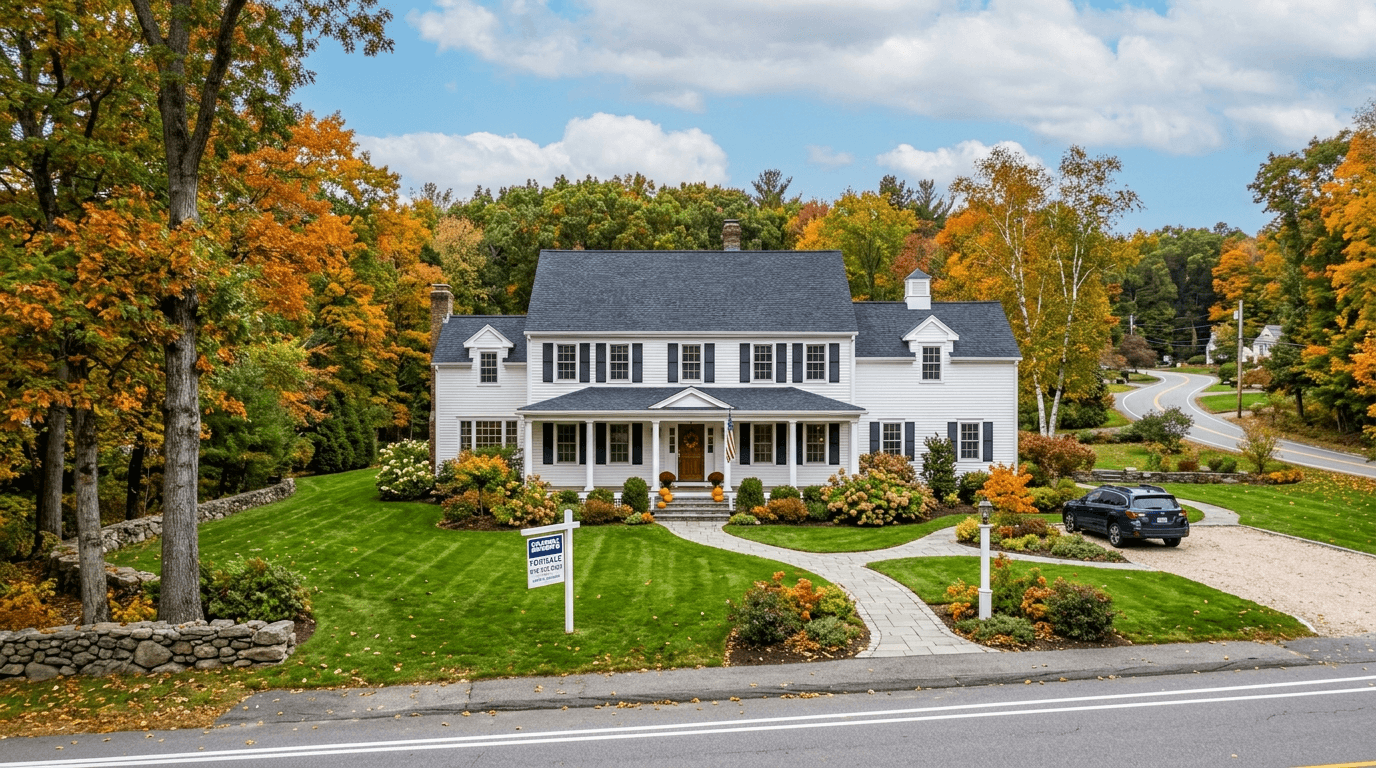
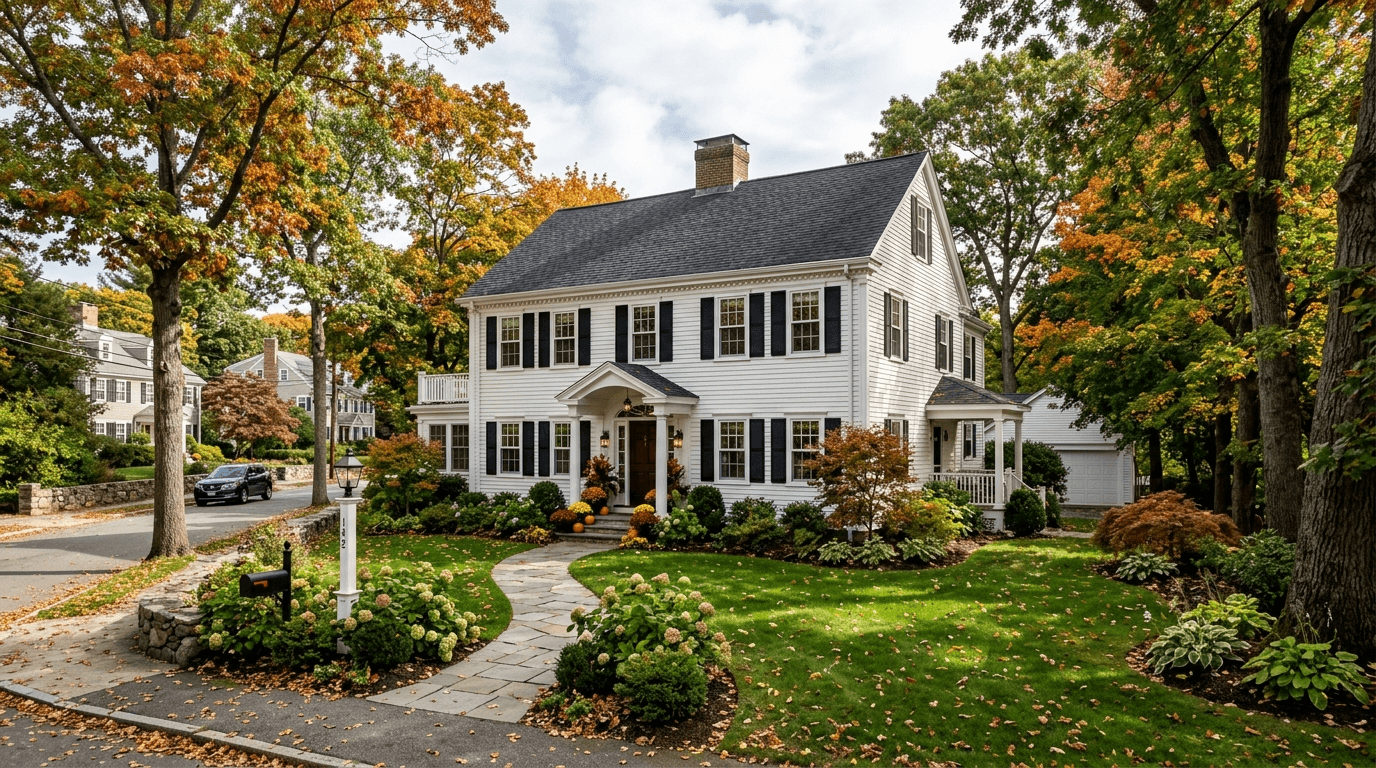
Partly, yes. Some higher-priced villages have larger lots, more renovated homes, and more prestigious streets. That is real, and it means a chunk of the village price gap is fundamental — not a demand inefficiency you can simply exploit.
A buyer who crosses from Waban into Newton Upper Falls may genuinely be getting a smaller lot, an older kitchen, or a busier street. That is not arbitrage. That is paying less for less.
Where the arbitrage idea still has teeth is when two homes are roughly comparable on lot, size, and condition but priced very differently because of which village name is on the listing. Those situations exist — but they require careful, comp-by-comp work, not a blanket "cross the line and save."
Do Property Taxes Change The Math?
Yes, and this matters.
A $2.5M home does not pay the same total tax bill as a $1.5M home, even at the same rate. The rate is uniform across Newton. The dollars are not, because assessed values are different.
The correct framing: same tax rate, different assessed values. A lower-priced village means a lower annual tax bill in dollar terms, even though the percentage rate is identical. That is a real, recurring cost difference — not just a sticker-price difference.
Wouldn't The Gap Already Be Gone If Entry-Tier Villages Were Underpriced?
This is the strongest counterargument, and it deserves an honest answer.
Markets do price in amenity differences — schools, walkability, lot size — and Newton is a sophisticated market with a lot of informed buyers. It is entirely possible that most of the village price gap reflects real, durable differences in what each village offers, not an exploitable mispricing.
What the data in this article can tell us:
•Citywide, total sales volume in May dropped from 240 last year to 210 this year — about a 12.5% decline. That is consistent with a tighter, choosier market on the volume side.
•We do not have published village-level YoY price-growth or days-on-market data showing entry-tier villages outpacing premium ones. So we cannot prove the gap is actively compressing.
Honest read: some of the gap is fundamental (lots, condition, feeder schools, prestige), and some of it is demand-driven and potentially shifts year to year. Treat village arbitrage as a way to test whether a lifestyle-comparable village offers better value for your specific search — not as a guaranteed discount.
How "Entry-Tier" Is Newton Upper Falls, Really?
Fair challenge. Newton Upper Falls, at $1,624,950 per the village-level data block above, sits about $320,000 above the citywide median of $1,305,000. By any normal definition, that is still a premium market in the Boston metro.
"Entry-tier" in this article means entry-tier within Newton — the lower end of the Newton single-family spectrum, not entry-tier housing in absolute terms. If your budget caps out below the citywide median, the village-arbitrage framing here is not going to unlock Newton for you. It is most useful for buyers already shopping in the $1.4M–$2M range who are weighing whether to stretch into a premium village or stay in a more accessible one.
What Should Buyers Take From Newton's Village-Level Data?
If you are buying for the long haul, start with the village map — not just the MLS.
Your best opportunities may be in entry- and mid-tier villages next to premium ones, if the lifestyle trade is acceptable to you. That could mean:
•Similar daily routine
•Same city services
•Same school district (different feeder school)
•Better price per square foot
•More room in your budget
This is village-level value shopping in plain English. You are not trying to "beat" Newton. You are trying to buy smarter inside Newton — with eyes open about which differences are real and which are demand-driven.
What Should Sellers Take From Newton's Village-Level Data?
If you are selling, do not price off generic "Newton comps." Price off your village.
A Waban sale does not automatically set a Newton Upper Falls floor. A Newton Upper Falls sale does not cap a Waban ceiling.
Your pricing needs to reflect:
•Your village
•Your feeder-school demand
•Your walkability
•Your condition
•Your current competition
Treating Newton as one ZIP code is one of the fastest ways to misprice your home. You may leave money on the table — or you may sit too long and chase a thinner market down, given that May sales volume dropped from 240 to 210 homes year over year.
Where Is The Real Opportunity In Newton Right Now?
The opportunity is in understanding that Newton has layers.
The citywide numbers are useful. The village numbers are where the real decisions happen.
Two honest caveats worth keeping in mind:
1. Part of the village price gap is fundamental (lots, condition, feeder schools) — not pure mispricing.
2. Crossing a village line is a lifestyle choice as much as a financial one.
If you want to know how your specific Newton village is performing right now — village-level medians, days on market, and recent comps — ask for the village-by-village numbers before you make your next move.